Insurance coverage for sedation varies wildly. VR is rarely covered, but it’s often affordable out of pocket. Sedation may be partially covered if it’s deemed medically necessary — which, for documented anxiety, it sometimes is. Ask your insurer directly; don’t assume.
Also, don’t underestimate the power of small environmental tweaks. Noise-canceling headphones, a weighted blanket, scheduled early-morning appointments when the office is quiet — these aren’t clinical interventions, but they move the needle. Sometimes significantly.
And if you’ve been avoiding the dentist for years? Start with a phone call, not a procedure. Tell them you’re anxious. Good practices hear that every day, and they’ve built their whole workflow around it.
The chair doesn’t have to be a place of dread. With VR, smarter sedation, and a dentist who listens, it can be… well, maybe not pleasant. But manageable. And that’s a start.
A Few Things Worth Knowing
Insurance coverage for sedation varies wildly. VR is rarely covered, but it’s often affordable out of pocket. Sedation may be partially covered if it’s deemed medically necessary — which, for documented anxiety, it sometimes is. Ask your insurer directly; don’t assume.
Also, don’t underestimate the power of small environmental tweaks. Noise-canceling headphones, a weighted blanket, scheduled early-morning appointments when the office is quiet — these aren’t clinical interventions, but they move the needle. Sometimes significantly.
And if you’ve been avoiding the dentist for years? Start with a phone call, not a procedure. Tell them you’re anxious. Good practices hear that every day, and they’ve built their whole workflow around it.
The chair doesn’t have to be a place of dread. With VR, smarter sedation, and a dentist who listens, it can be… well, maybe not pleasant. But manageable. And that’s a start.
A Few Things Worth Knowing
Insurance coverage for sedation varies wildly. VR is rarely covered, but it’s often affordable out of pocket. Sedation may be partially covered if it’s deemed medically necessary — which, for documented anxiety, it sometimes is. Ask your insurer directly; don’t assume.
Also, don’t underestimate the power of small environmental tweaks. Noise-canceling headphones, a weighted blanket, scheduled early-morning appointments when the office is quiet — these aren’t clinical interventions, but they move the needle. Sometimes significantly.
And if you’ve been avoiding the dentist for years? Start with a phone call, not a procedure. Tell them you’re anxious. Good practices hear that every day, and they’ve built their whole workflow around it.
The chair doesn’t have to be a place of dread. With VR, smarter sedation, and a dentist who listens, it can be… well, maybe not pleasant. But manageable. And that’s a start.
Sedation Alternatives: Beyond the Old Standbys
Sedation dentistry has evolved. It’s no longer just “laughing gas or nothing.” Today there’s a spectrum, and the right choice depends on your anxiety level, medical history, and the complexity of the procedure.
The Main Options at a Glance
| Option | Consciousness Level | Best For | Recovery |
|---|---|---|---|
| Nitrous oxide (laughing gas) | Awake, relaxed | Mild anxiety, short visits | Minutes |
| Oral sedatives | Drowsy but responsive | Moderate anxiety | Several hours |
| IV sedation | Twilight state | Severe anxiety, longer work | Rest of day |
| General anesthesia | Fully unconscious | Complex cases, phobias | Full day+ |
Each has trade-offs. Nitrous oxide is the gentlest — you’re in control, and you can drive yourself home. IV sedation is deeper but requires a driver and a cleared schedule. General anesthesia is reserved for specific situations and typically involves a specialist.
Newer, Gentler Sedation Approaches
Some practices now offer intranasal sedation — a spray rather than a needle — which is a big deal for patients whose fear includes needles. Others use computer-controlled delivery systems that fine-tune the dose in real time, reducing the “too out of it” feeling that turns some people off sedation entirely.
And then there’s the combination approach: light sedation plus VR. It sounds redundant, but for highly anxious patients, the two together can mean a lower drug dose and a calmer experience. Less medication, more comfort. That’s a win.
Choosing What’s Right for You
There’s no universal answer here. The best approach depends on:
- Your anxiety level — mild jitters versus full-blown panic are different problems.
- Your medical history — some sedatives interact with medications or conditions.
- The procedure itself — a cleaning and a root canal are not the same beast.
- Your preferences — some people hate feeling “out of control” and prefer VR; others want to be fully checked out.
Have an honest conversation with your dentist. Not a rushed one in the hallway — an actual conversation, ideally before the appointment. Many practices offer consultations specifically for anxious patients. Use them.
A Few Things Worth Knowing
Insurance coverage for sedation varies wildly. VR is rarely covered, but it’s often affordable out of pocket. Sedation may be partially covered if it’s deemed medically necessary — which, for documented anxiety, it sometimes is. Ask your insurer directly; don’t assume.
Also, don’t underestimate the power of small environmental tweaks. Noise-canceling headphones, a weighted blanket, scheduled early-morning appointments when the office is quiet — these aren’t clinical interventions, but they move the needle. Sometimes significantly.
And if you’ve been avoiding the dentist for years? Start with a phone call, not a procedure. Tell them you’re anxious. Good practices hear that every day, and they’ve built their whole workflow around it.
The chair doesn’t have to be a place of dread. With VR, smarter sedation, and a dentist who listens, it can be… well, maybe not pleasant. But manageable. And that’s a start.
Sedation Alternatives: Beyond the Old Standbys
Sedation dentistry has evolved. It’s no longer just “laughing gas or nothing.” Today there’s a spectrum, and the right choice depends on your anxiety level, medical history, and the complexity of the procedure.
The Main Options at a Glance
| Option | Consciousness Level | Best For | Recovery |
|---|---|---|---|
| Nitrous oxide (laughing gas) | Awake, relaxed | Mild anxiety, short visits | Minutes |
| Oral sedatives | Drowsy but responsive | Moderate anxiety | Several hours |
| IV sedation | Twilight state | Severe anxiety, longer work | Rest of day |
| General anesthesia | Fully unconscious | Complex cases, phobias | Full day+ |
Each has trade-offs. Nitrous oxide is the gentlest — you’re in control, and you can drive yourself home. IV sedation is deeper but requires a driver and a cleared schedule. General anesthesia is reserved for specific situations and typically involves a specialist.
Newer, Gentler Sedation Approaches
Some practices now offer intranasal sedation — a spray rather than a needle — which is a big deal for patients whose fear includes needles. Others use computer-controlled delivery systems that fine-tune the dose in real time, reducing the “too out of it” feeling that turns some people off sedation entirely.
And then there’s the combination approach: light sedation plus VR. It sounds redundant, but for highly anxious patients, the two together can mean a lower drug dose and a calmer experience. Less medication, more comfort. That’s a win.
Choosing What’s Right for You
There’s no universal answer here. The best approach depends on:
- Your anxiety level — mild jitters versus full-blown panic are different problems.
- Your medical history — some sedatives interact with medications or conditions.
- The procedure itself — a cleaning and a root canal are not the same beast.
- Your preferences — some people hate feeling “out of control” and prefer VR; others want to be fully checked out.
Have an honest conversation with your dentist. Not a rushed one in the hallway — an actual conversation, ideally before the appointment. Many practices offer consultations specifically for anxious patients. Use them.
A Few Things Worth Knowing
Insurance coverage for sedation varies wildly. VR is rarely covered, but it’s often affordable out of pocket. Sedation may be partially covered if it’s deemed medically necessary — which, for documented anxiety, it sometimes is. Ask your insurer directly; don’t assume.
Also, don’t underestimate the power of small environmental tweaks. Noise-canceling headphones, a weighted blanket, scheduled early-morning appointments when the office is quiet — these aren’t clinical interventions, but they move the needle. Sometimes significantly.
And if you’ve been avoiding the dentist for years? Start with a phone call, not a procedure. Tell them you’re anxious. Good practices hear that every day, and they’ve built their whole workflow around it.
The chair doesn’t have to be a place of dread. With VR, smarter sedation, and a dentist who listens, it can be… well, maybe not pleasant. But manageable. And that’s a start.
The drill whirs. The smell of clove hits your nose. Your palms go clammy before you even sit in the chair. If that sounds familiar, you’re not alone — roughly 36% of adults deal with some form of dental anxiety, and for about 12%, it’s severe enough to keep them away entirely. That’s a real problem, because avoiding the dentist doesn’t make the cavity go away. It just makes it bigger, pricier, and more painful down the road.
Here’s the good news: the days of “just grip the armrest and white-knuckle it” are fading. Two approaches are quietly reshaping how anxious patients get through appointments — virtual reality (VR) and a new generation of sedation alternatives. Let’s dive into both, because honestly, understanding your options is half the battle.
Why Dental Anxiety Is So Stubborn
Dental fear isn’t irrational. It’s rooted in real sensory triggers: the sound of the drill, the feeling of numbness, the loss of control when you’re reclined with your mouth open. Some people had a bad childhood experience. Others inherited the fear from a parent who dreaded the chair. And a few… well, they just don’t like anyone’s hands near their face. Fair enough.
The tricky part is that anxiety feeds on itself. You dread the appointment, you cancel, the problem worsens, and next time the fear is bigger. Breaking that loop usually means addressing the anxiety and the dental work at the same time — not one after the other.
Virtual Reality: Distraction That Actually Works
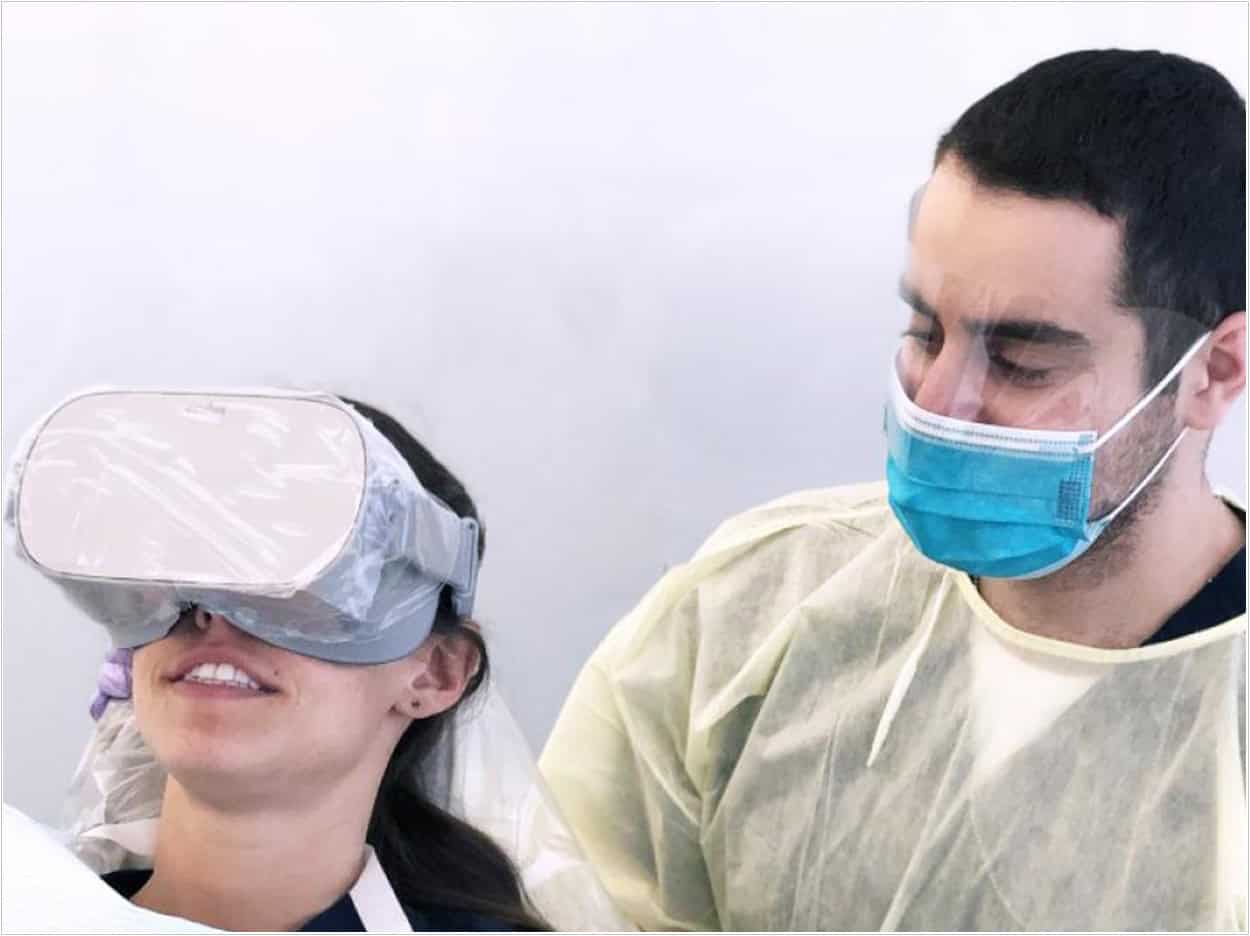
VR in dentistry isn’t a gimmick anymore. It’s a legitimate clinical tool. The concept is simple: you put on a headset, and suddenly you’re snorkeling over a coral reef or flying through a canyon instead of staring at a ceiling tile. The brain can only process so much sensory input at once, so the visual and auditory immersion crowds out the scary stuff.
What the Research Says
Studies have shown that VR can reduce reported anxiety and even lower heart rate during procedures. In some trials, patients using VR needed less pain medication afterward. That’s not nothing. One review found VR reduced dental anxiety scores by roughly 30–40% in adult patients, which is comparable to some low-dose pharmaceutical options — without the grogginess.
Why It Feels Different From Watching TV
A TV on the ceiling is passive. VR is immersive. There’s a difference between “watching a beach” and “being on a beach,” and your nervous system knows it. The headset also blocks out the visual triggers — the instruments, the bright light, the dentist’s focused expression. For many patients, that alone is a relief.
Practical Considerations
- Cost: Some practices include VR at no extra charge; others add a fee. Ask upfront.
- Not for everyone: Claustrophobia, motion sickness, or certain medical conditions may rule it out.
- Best for: Mild to moderate anxiety, longer procedures, and patients who want to avoid medication.
That said, VR isn’t a magic wand. For severe phobias, it works best as part of a broader strategy.
Sedation Alternatives: Beyond the Old Standbys
Sedation dentistry has evolved. It’s no longer just “laughing gas or nothing.” Today there’s a spectrum, and the right choice depends on your anxiety level, medical history, and the complexity of the procedure.
The Main Options at a Glance
| Option | Consciousness Level | Best For | Recovery |
|---|---|---|---|
| Nitrous oxide (laughing gas) | Awake, relaxed | Mild anxiety, short visits | Minutes |
| Oral sedatives | Drowsy but responsive | Moderate anxiety | Several hours |
| IV sedation | Twilight state | Severe anxiety, longer work | Rest of day |
| General anesthesia | Fully unconscious | Complex cases, phobias | Full day+ |
Each has trade-offs. Nitrous oxide is the gentlest — you’re in control, and you can drive yourself home. IV sedation is deeper but requires a driver and a cleared schedule. General anesthesia is reserved for specific situations and typically involves a specialist.
Newer, Gentler Sedation Approaches
Some practices now offer intranasal sedation — a spray rather than a needle — which is a big deal for patients whose fear includes needles. Others use computer-controlled delivery systems that fine-tune the dose in real time, reducing the “too out of it” feeling that turns some people off sedation entirely.
And then there’s the combination approach: light sedation plus VR. It sounds redundant, but for highly anxious patients, the two together can mean a lower drug dose and a calmer experience. Less medication, more comfort. That’s a win.
Choosing What’s Right for You
There’s no universal answer here. The best approach depends on:
- Your anxiety level — mild jitters versus full-blown panic are different problems.
- Your medical history — some sedatives interact with medications or conditions.
- The procedure itself — a cleaning and a root canal are not the same beast.
- Your preferences — some people hate feeling “out of control” and prefer VR; others want to be fully checked out.
Have an honest conversation with your dentist. Not a rushed one in the hallway — an actual conversation, ideally before the appointment. Many practices offer consultations specifically for anxious patients. Use them.
A Few Things Worth Knowing
Insurance coverage for sedation varies wildly. VR is rarely covered, but it’s often affordable out of pocket. Sedation may be partially covered if it’s deemed medically necessary — which, for documented anxiety, it sometimes is. Ask your insurer directly; don’t assume.
Also, don’t underestimate the power of small environmental tweaks. Noise-canceling headphones, a weighted blanket, scheduled early-morning appointments when the office is quiet — these aren’t clinical interventions, but they move the needle. Sometimes significantly.
And if you’ve been avoiding the dentist for years? Start with a phone call, not a procedure. Tell them you’re anxious. Good practices hear that every day, and they’ve built their whole workflow around it.
The chair doesn’t have to be a place of dread. With VR, smarter sedation, and a dentist who listens, it can be… well, maybe not pleasant. But manageable. And that’s a start.