
Let’s be real. Shift work is a brutal, beautiful beast. One week you’re waking up at 4 AM to the sound of a coffee maker sputtering. The next, you’re clocking out at 2 AM, staring at a moon that feels like a judgmental eye. Your body? It’s screaming. Not loudly, but in a low, constant hum of confusion. That hum? That’s your circadian rhythm throwing a tantrum.
But here’s the thing: you don’t have to live in a fog of exhaustion and digestive chaos. Optimizing your circadian rhythm isn’t about fighting your schedule. It’s about tricking your brain into thinking the sun rises when you say it does. Sound impossible? It’s not. Let’s break it down—no fluff, just real strategies that actually work for people who work when the rest of the world is asleep.
Why Your Body Hates Rotating Shifts (And Why It’s Not Your Fault)
Your circadian rhythm is basically a 24-hour internal clock. It’s run by a tiny region in your brain called the suprachiasmatic nucleus. Fancy name, right? But its job is simple: tell your body when to release melatonin (sleep hormone) and when to pump out cortisol (wake-up juice).
Now, imagine you’re a night shift nurse. You come home at 7 AM, pull the blackout curtains, and try to sleep. But your brain is screaming, “It’s morning! Sunlight! Let’s go!” That’s the disconnect. You’re fighting millions of years of evolution. No wonder you feel like a zombie.
Here’s the kicker: Studies show that chronic circadian misalignment increases your risk for heart disease, diabetes, and even some cancers. Scary, right? But knowledge is power. Once you understand the enemy, you can outsmart it.
The Three Pillars of Shift Work Rhythm Optimization
I’m going to give you a framework. Think of it as a tripod. If one leg wobbles, the whole thing collapses. But when all three are solid? You’ll feel like a different person. Honestly.
1. Light: Your Master Puppeteer
Light is the single most powerful tool you have. It’s not even close. Your eyes have special cells (intrinsically photosensitive retinal ganglion cells — try saying that three times fast) that detect blue light and tell your brain, “Hey, it’s daytime!”
For night shifts: You need to see bright light during your shift. Not just any light—blue-enriched white light. Think of it like a caffeine jolt for your brain. Wear blue-blocking glasses on your commute home. Yes, even if you look like a dork. Your sleep is worth it.
For day sleep: Total darkness. I mean, vampire-level darkness. Blackout curtains? Essential. Also, wear an eye mask. And for the love of all things holy, put your phone in another room. That little blue glow is a circadian saboteur.
2. Timing: When You Eat, Sleep, and Move
Your body doesn’t just care about how much you sleep. It cares about when. This is called chronobiology. And it’s a game-changer.
Eating: Try to eat your largest meal before your shift, not during. Why? Digestion takes energy. And if you eat a heavy meal at 3 AM, your body is confused—it’s trying to digest and stay awake at the same time. Not a good combo. Keep snacks light: nuts, fruit, yogurt. And avoid sugar spikes. They’ll crash you harder than a bad relationship.
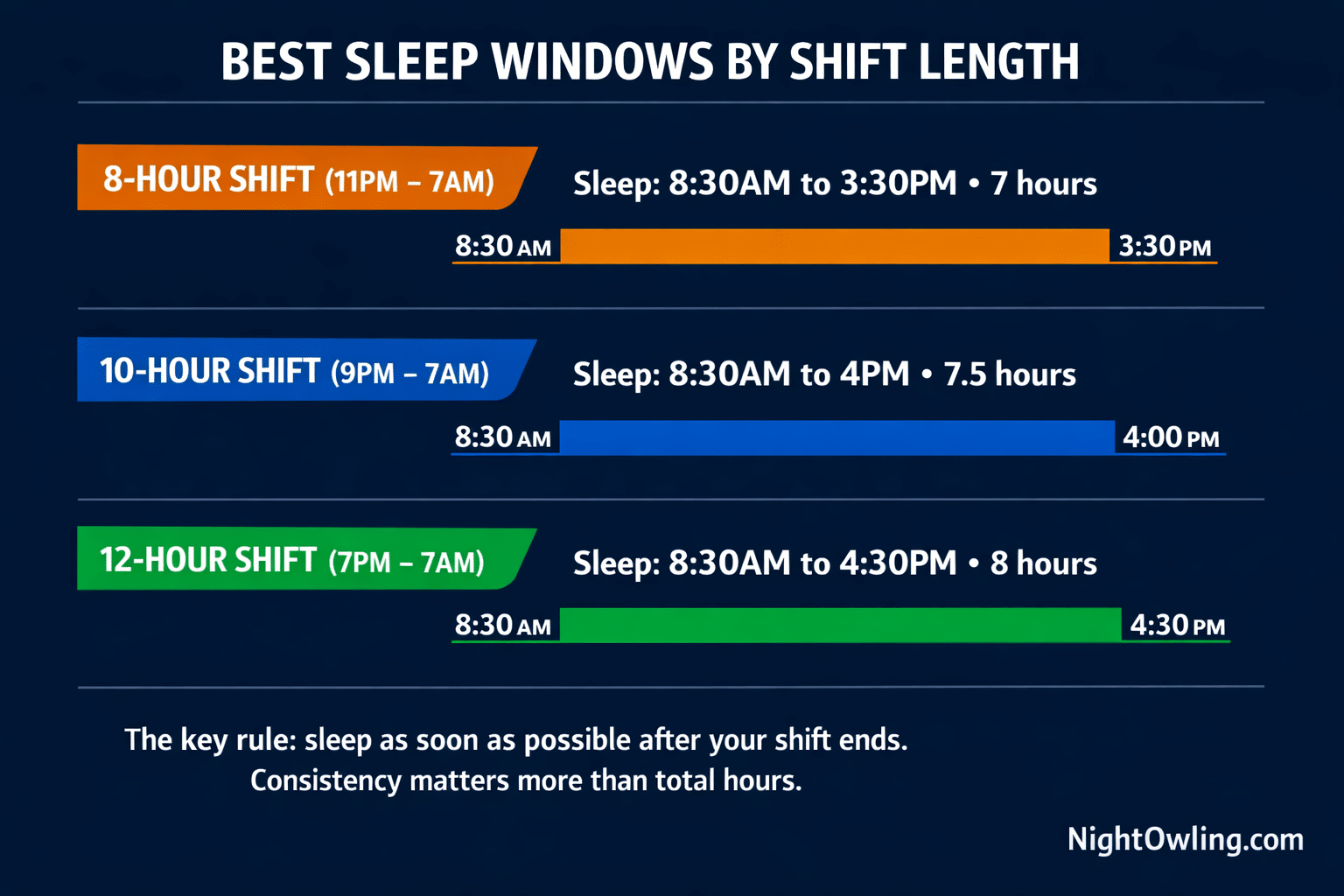
Sleep scheduling: This is where it gets tricky. If you’re on a rotating schedule, try to anchor your sleep. For example, if you’re working nights, go to bed immediately after your shift. Don’t “wind down” for an hour. Your window for quality sleep is narrow. Use it.
Movement: Exercise is a double-edged sword. A quick walk during your break? Great. A heavy gym session right before bed? Disaster. Your core temperature rises, and your body stays wired. Save the heavy lifting for after you wake up.
3. Environment: Your Sleep Sanctuary (or Lack Thereof)
I’m going to be blunt: most shift workers have terrible sleep environments. They try to sleep in a room that’s too warm, too noisy, or too bright. Here’s what you need:
- Temperature: Keep it cool. 65-68°F (18-20°C) is ideal. Your body needs to drop its core temperature to fall asleep.
- Sound: White noise machine or a fan. Drown out the lawnmowers, the kids, the delivery trucks.
- Smell: Lavender or chamomile. Seriously. Aromatherapy isn’t woo-woo—it’s science. It can lower cortisol.
And here’s a weird tip: take a warm shower right before bed. The temperature drop after you get out mimics the natural cooling your body does before sleep. It’s like a cheat code.
Sample Schedule: The Night Shift Worker’s Blueprint
Let’s make this practical. Say you work 11 PM to 7 AM. Here’s a rough schedule. Adjust it to your life, but the principles stay the same.
| Time | Action | Why |
|---|---|---|
| 10:00 PM | Wake up. Eat a small meal. | Give your body time to digest before work. |
| 10:30 PM | Expose yourself to bright light. | Tell your brain: “It’s go time!” |
| 11:00 PM – 7:00 AM | Work. Keep lights bright. Eat light snacks. | Maintain alertness. Avoid heavy digestion. |
| 7:00 AM | Commute home with blue-blocking glasses. | Block the morning sun from waking you up. |
| 7:30 AM | Dark room. Cool temp. White noise. Sleep. | Your window for deep sleep is now. Don’t waste it. |
| 3:30 PM | Wake up. Eat a balanced meal. | Your body is ready for fuel. |
| 4:00 PM – 9:00 PM | Personal time. Light exercise if possible. | Don’t overstimulate before your next shift. |
See the pattern? It’s all about light exposure and timing. You’re not fighting your biology—you’re hacking it.
Common Mistakes Shift Workers Make (And How to Fix Them)
I’ve been there. You’re exhausted, so you grab a Monster Energy drink at 2 AM. Bad move. Caffeine has a half-life of about 5 hours. That means if you drink it at 2 AM, half of it is still in your system at 7 AM—when you’re trying to sleep. Swap it for green tea or just water. Your sleep will thank you.
Another mistake? “Catching up” on sleep during days off. It doesn’t work. Your body doesn’t bank sleep like a savings account. In fact, sleeping 12 hours on Saturday can mess up your rhythm even more. Stick to a consistent sleep window, even on your days off. Yes, even if it means waking up at 3 PM on a Sunday.
And please—stop using alcohol as a sleep aid. It might help you fall asleep faster, but it destroys your REM sleep. You’ll wake up feeling like you’ve been hit by a truck. Not worth it.
Supplements That Actually Help (But Don’t Rely on Them)
Look, I’m not a doctor. But there’s decent evidence for a few things:
- Melatonin: Low doses (0.5-1 mg) taken 30 minutes before your desired sleep time. Not the 10 mg gummies you see at the store—that’s overkill and can cause grogginess.
- Magnesium Glycinate: Helps relax muscles and calm the nervous system. Take it an hour before bed.
- L-Theanine: Found in green tea. Promotes relaxation without sedation. Good for winding down.
But remember: supplements are supporting actors, not the star. The star is light, timing, and environment. Don’t try to supplement your way out of a bad schedule.
When the Rhythm Breaks: Signs You Need a Reset
Sometimes, no matter how hard you try, your rhythm just shatters. You might feel:
- Chronic brain fog that doesn’t lift.
- Irritability that’s ruining your relationships.
- Digestive issues (bloating, constipation, or diarrhea).
- A feeling of “jet lag” even after a full night’s sleep.
If that’s you, it’s time for a reset day. Pick one day where you have no obligations. Stay in dim light. Eat small, regular meals. Go for a gentle walk. And sleep when you feel tired—not when the clock says so. It’s like rebooting a computer. Sometimes you just need to clear the cache.
The Final Word (No, Really)
Shift work isn’t going away. But your suffering doesn’t have to be permanent. You’ve got the tools now. Light is your remote control. Timing is your script. And your environment? That’s the stage you build every single day.
It won’t be perfect. Some nights you’ll still feel like a raccoon rummaging through a trash can at 4 AM. That’s okay. The goal isn’t perfection—it’s progress. It’s waking up (or going to bed) with a little more energy, a little less fog, and a whole lot more control over