Let’s be honest — working nights or rotating shifts is like asking your body to run a marathon on a treadmill that’s moving backward. Your internal clock, that tiny master conductor in your brain, screams for sleep when you need to be sharp, and then yawns when you finally hit the pillow. It’s brutal. But here’s the thing: you’re not doomed to a life of brain fog and 2 p.m. crashes. Circadian rhythm optimization isn’t just for early birds or jet-setters. It’s for you — the nurse, the trucker, the factory worker, the IT guy keeping servers alive at 3 a.m.
So, how do you trick a system that’s been hardwired for millions of years? You don’t trick it. You work with it — strategically, imperfectly, and with a few clever hacks that actually stick. Let’s break this down without the fluff.
Why Your Body Hates the Night Shift (And Why It’s Not Your Fault)
Your circadian rhythm is roughly a 24-hour cycle governed by a cluster of neurons in the hypothalamus called the suprachiasmatic nucleus. Think of it as your body’s CEO. It releases cortisol to wake you, melatonin to make you sleepy, and regulates your core temperature, digestion, even your mood. Light is its primary paycheck. When you work nights, you’re essentially paying your CEO in Monopoly money — the light signals are all wrong.
That’s why shift workers have higher rates of metabolic syndrome, heart issues, and mood disorders. It’s not just “feeling tired.” It’s a physiological mismatch. But here’s the good news: you can recalibrate. Not perfectly, but enough to feel human again.
The Golden Rule: Anchor Your Sleep to a Fixed Time
I know, I know — you’ve heard this before. But hear me out. The biggest mistake shift workers make is treating sleep like a nap. They get off at 7 a.m., sleep till 11 a.m., then “catch up” later. That fragmented sleep destroys deep REM stages. Your body needs a solid block — ideally 7 to 9 hours — at the same time every day, even on your days off.
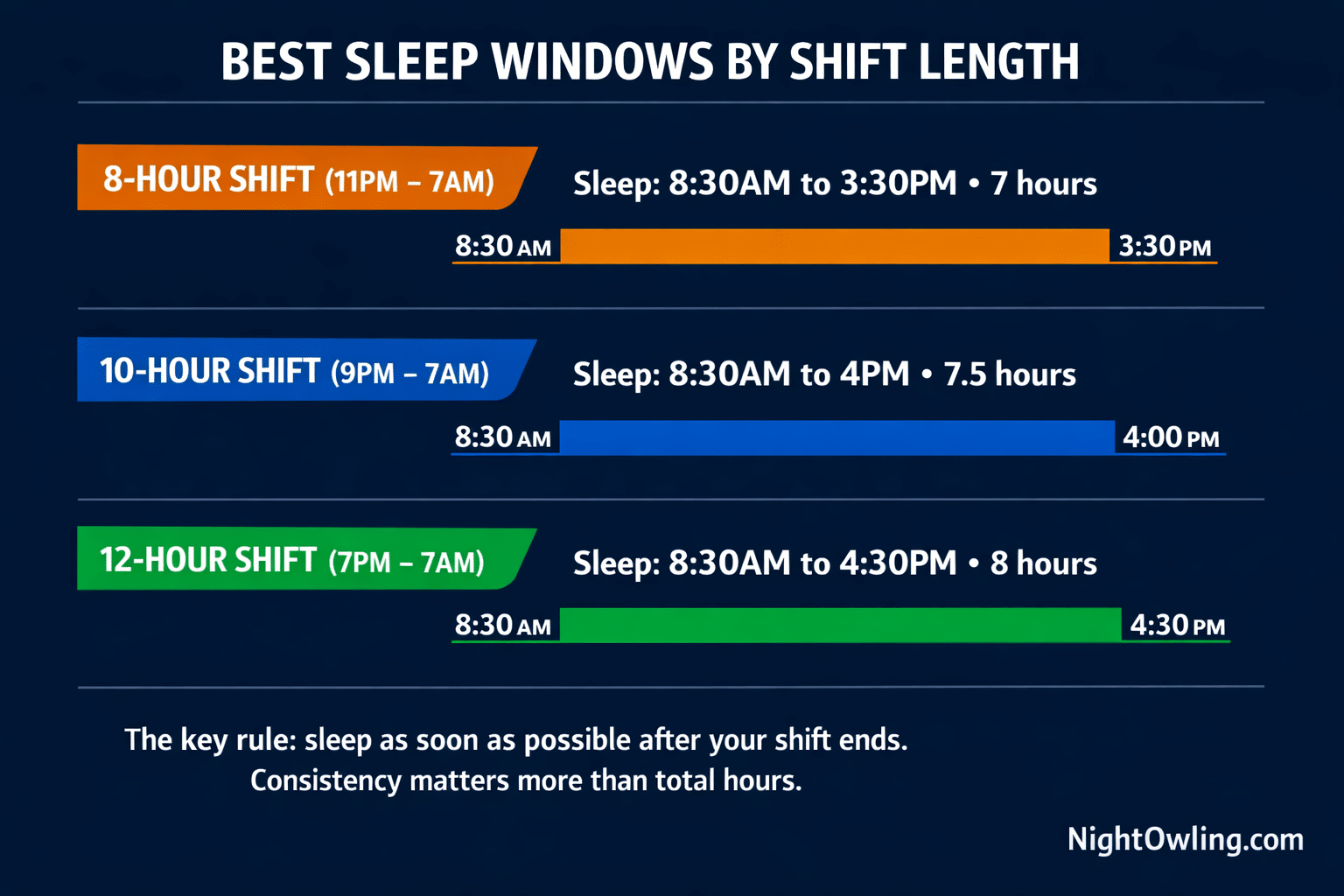
Pick your anchor. For night shifters, that’s usually 8 a.m. to 4 p.m. For early morning starts (like 4 a.m. shifts), it’s 8 p.m. to 3 a.m. The key? Consistency beats duration. A fixed 6.5 hours beats a wandering 8 hours. Your brain learns to anticipate sleep when the anchor is stable.
But What About “Catching Up” on Days Off?
Well, that’s the trap. If you sleep 10 hours on Saturday to recover, you’ll wreck your Sunday night sleep. Instead, keep your anchor within 1-2 hours of your workday schedule. Shift your sleep window gradually — like 30 minutes later each day — if you need to socialize. But don’t flip to a day schedule entirely. Your body will thank you with fewer migraines and less grogginess.
Light: The Master Switch You’re Probably Misusing
Here’s where it gets interesting. Light is more powerful than any supplement. For night shifters, the goal is to simulate daytime while you’re working, and simulate darkness when you get home. Sounds simple, right? But most people mess this up in two ways.
First, they wear sunglasses on the drive home. That’s actually counterproductive — you want some bright light before sleep? No, wait. Let me rephrase. You want to avoid bright light in the last hour before bed. So if you drive home at 7 a.m. in summer, wear blue-blocking glasses (orange or amber lenses) for the last 30 minutes of your commute. But during your shift, blast the lights. Use a bright light therapy lamp (10,000 lux) for the first 2-3 hours of your shift — it tricks your brain into thinking it’s morning.
Second mistake? Blackout curtains that are 90% effective. You need 100%. Any sliver of light — even from a streetlamp — can suppress melatonin by up to 50%. Get blackout shades, and also cover your alarm clock. And yes, turn your phone face down. That blue light is a sneaky little saboteur.
Melatonin: Use It Like a Tool, Not a Crutch
Melatonin supplements are wildly misunderstood. People take 10 mg and wonder why they feel groggy. Here’s the deal: melatonin is a timing signal, not a sedative. For shift workers, the right dose is usually 0.5 to 3 mg, taken 30-60 minutes before your desired bedtime. Higher doses just cause next-day fogginess and weird dreams.
But timing matters more than dose. If you work nights and sleep at 8 a.m., take melatonin at 7:30 a.m. — not at 2 a.m. when you’re hitting a slump. And never take it before a shift. That’s like drinking coffee to fall asleep. Also, skip it on your days off if you’re trying to reset to a day schedule. Use it only to reinforce your anchor sleep window.
Strategic Caffeine: The Art of the Caffeine Cutoff
Caffeine is your friend and your enemy. The half-life is about 5-6 hours. So a coffee at 2 a.m. still has half its kick at 8 a.m. when you’re trying to sleep. The rule? No caffeine within 6 hours of your bedtime. For a night shifter sleeping at 8 a.m., that means last cup around 2 a.m. — max.
But here’s a pro tip: use caffeine in pulses. Small doses (50-100 mg) every 2-3 hours during your shift, rather than one giant mug. This keeps your alertness steady without the crash. And consider swapping your last cup for green tea — it has L-theanine, which smooths out the jitters.
Meal Timing: Your Gut Has a Clock Too
Your digestive system runs on a circadian rhythm as well. Eating a heavy meal at 3 a.m. is like sending your gut to a rave when it wants to sleep. The result? Acid reflux, bloating, and poor blood sugar control.
Try this: eat your largest meal before your shift starts, not during. Then have small, light snacks — think yogurt, nuts, fruit — during the night. And avoid sugary energy drinks like the plague. They spike insulin, then crash you harder than a toddler after a birthday party.
What About Intermittent Fasting?
Some shift workers swear by time-restricted eating. If you can compress your eating window to 8-10 hours (e.g., 6 p.m. to 2 a.m. for night shift), your body adapts better to fat burning. But honestly, it’s not for everyone. If you’re new to shift work, focus on regular meals first. Fasting adds stress, and stress wrecks sleep.
Napping: The Shift Worker’s Secret Weapon
Naps are not for the weak. They’re for the smart. The trick is the power nap plus caffeine nap. Drink a small coffee, then immediately lie down for 20 minutes. The caffeine takes 20-25 minutes to kick in, so you wake up just as it hits. It’s like a double espresso with a side of rest.
For night shifts, take a 90-minute nap before your shift if you can. That covers one full sleep cycle and reduces the “sleep debt” you’ll accumulate. And if you hit a 3 a.m. wall, a 10-minute micro-nap at your desk (if allowed) beats another energy drink.
Exercise: Timing It Right (Or Wrong)
Exercise is a double-edged sword for shift workers. A heavy workout right after your shift delays sleep because it raises core body temperature and cortisol. But a light walk or gentle stretching? That helps you wind down.
The sweet spot is exercising 2-3 hours before your shift. That boosts alertness without wrecking your post-shift sleep. If you can only exercise after work, keep it low-intensity — yoga, walking, or swimming. Save the heavy lifting for your days off.
Social Life and Family: The Unspoken Struggle
You can optimize every hormone, but if your family treats your sleep time as optional, you’re sunk. Have a frank conversation. Post a “do not disturb” sign. Wear earplugs and a sleep mask. And yes, you might have to skip some daytime events. That’s okay. Your health matters more than a barbecue.
One trick that works? Schedule “awake time” with your family during your anchor window. For night shifters, that might be 4 p.m. to 7 p.m. before work. Make it quality time — dinner together, playing with the kids, whatever. It makes the sacrifice feel worth it.
Supplements That Actually Help (And Ones That Don’t)
Beyond melatonin, a few others have decent evidence:
- Magnesium glycinate (200-400 mg before bed) — relaxes muscles and calms the nervous system.
- L-theanine (100-200 mg) — promotes relaxation without drowsiness, pairs well with caffeine.
- Vitamin D — shift workers are chronically deficient because they miss sunlight. Get levels checked.
- Omega-3s — support brain health and may help with mood stability.
Skip the “sleep blends” with 15 ingredients. You don’t need that. And avoid alcohol as a sleep aid — it fragments sleep worse than night shift itself.
Putting It All Together: A Sample Night Shift Schedule
Here’s a realistic template for a 10 p.m. to 6 a.m. shift: