Let’s be honest. As an amateur runner, cyclist, or triathlete, your training plan probably looks something like this: train hard, try to get faster, maybe hit a race, get burnt out, take a break, and then… start all over again. It’s a rollercoaster. And the results? Well, they can be just as unpredictable.
What if there was a smarter way to structure your year—a method that actually respected the natural rhythms of life, the changing seasons, and your body’s need for both stress and recovery? That’s where cyclical and seasonal periodization comes in. It’s not just for pros. In fact, it might be the secret weapon busy amateurs have been missing.
What is Periodization, Anyway? (And Why It’s Not Scary)
Okay, jargon first. Periodization is simply the planned manipulation of training variables—like volume, intensity, and rest—over time. Think of it like building a house. You don’t start with the wallpaper. You lay the foundation, build the frame, and then add the details. Training works the same way.
For us amateurs, the most practical approach is seasonal periodization. This means aligning your training cycles with the actual seasons of the year and your personal calendar. Winter isn’t for peak fitness; it’s for building a robust engine. Summer isn’t just for racing; it’s for sharpening and enjoying the rewards.
The Four Seasons of Your Athletic Year
Here’s how to break it down. Visualize your year not as 12 months of grind, but as four distinct phases, each with a unique purpose.
1. The Foundation & Prep Phase (Usually Late Fall/Winter)
This is your off-season. The days are short, the weather is grim. Perfect. The goal here isn’t speed; it’s resilience. We’re talking about base building.
- Focus: Low-to-moderate intensity, gradually increasing volume. Think long, easy runs or rides.
- Strength: This is the best time to hit the gym. Build general strength, fix imbalances, work on that core.
- Mental Reset: Explore new routes, try a different cross-training activity (swimming, skiing). Have fun without a pace on your watch.
2. The Build Phase (Early to Mid-Spring)
As the world thaws, your training gets more specific. You’ve got that solid foundation—now it’s time to add structure.
Introduce targeted workouts: tempo runs, hill repeats, interval sessions. Volume might plateau or dip slightly as intensity creeps in. This is where you start to feel like a real athlete again. The key is progression—don’t jump into hard intervals five days a week. Add one key workout, then maybe two, spacing them out.
3. The Peak & Race Phase (Summer/Early Fall)
Race season! This phase is about sharpening your fitness and aligning it with your key events. Training becomes highly specific. If you’re training for a hilly marathon, your long runs should include hills. For a cycling time trial, you’re practicing sustained threshold efforts.
Volume often decreases (this is called a taper) before a big race to allow your body to absorb all the hard work and feel fresh on start day. It’s a delicate balance—maintaining fitness while shedding fatigue.
4. The Transition Phase (Post-Race Fall)
This is the phase most amateurs skip, and it’s a huge mistake. After your goal race, you need a deliberate break. Not just a few days, but a few weeks of active rest.
Go for a hike. Play another sport. Do anything that isn’t your structured training. This mental and physical reset is what prevents burnout and injury, setting you up to actually want to start the next foundation phase. It’s the crucial comma in your training sentence, not the final period.
Making It Work for Your Real, Busy Life
The theory is great, but your life isn’t a textbook. Here’s the deal: you have to adapt the model to your seasons. Maybe your “winter” is actually a brutally busy quarter at work. That becomes your foundation phase—focus on maintenance, not progression.
Use this simple table to map your personal year:
| Season of Life | Training Phase | Your Adjusted Focus |
| Holiday Chaos (Nov-Dec) | Foundation / Maintenance | Short, consistent workouts. Priority is just not losing fitness. |
| New Year, New Goals (Jan-Feb) | Foundation / Early Build | Can gradually increase volume. Set realistic spring targets. |
| Spring Busyness (e.g., Tax Season, Kids’ Sports) | Build / Sustain | Protect 2-3 key weekly workouts. Let other days be flexible. |
| Summer Vacation | Peak / Race | Schedule key races here. Use vacation for quality training or recovery. |
See? It’s about fitting the philosophy to your reality, not the other way around.
The Cyclical Mindset: Progress Isn’t a Straight Line
This is the most important mental shift. In linear thinking, you always want to be better than last month. That’s a recipe for plateaus and frustration. Cyclical periodization accepts that fitness ebbs and flows.
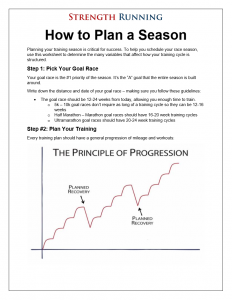
You might be incredibly fit in October for your marathon, deliberately less fit in January after your transition, and then building a different, potentially better kind of fitness by next summer. The graph of your progress looks more like an upward spiral than a straight line. Each cycle, you learn more about your body, your life, and what works.
Honestly, it’s liberating. It gives you permission to not be “race-ready” all year round. It turns the off-season from a guilt-ridden rest into a purposeful, productive part of the grand plan.
Getting Started with Your Seasonal Plan
Feeling overwhelmed? Don’t be. Start small.
- 1. Mark Your Calendar: Identify 1-3 “A” priority races for the next year. Work backwards from there.
- 2. Define Your Phases: Block out 4-6 weeks for Transition after your last race. Block out 8-12 weeks for Foundation before your Build phase. The dates don’t have to be perfect.
- 3. Assign a Focus to Each Phase: Literally write “BASE” or “SPEED” or “RACE” in your training log for those months. Let that word guide your workout choices.
- 4. Listen and Adapt: Got sick during your build phase? Extend it by a week. Feeling amazing in your foundation phase? Maybe add a little spice. The plan serves you, not the other way around.
In the end, applying seasonal periodization to amateur endurance training is about embracing rhythm. It’s the recognition that growth requires both effort and ease, stress and recovery, summer peaks and winter hibernation. It’s training with the wisdom of the seasons, not against them. And that might just be the key to not only performing better, but enjoying the journey for years to come.